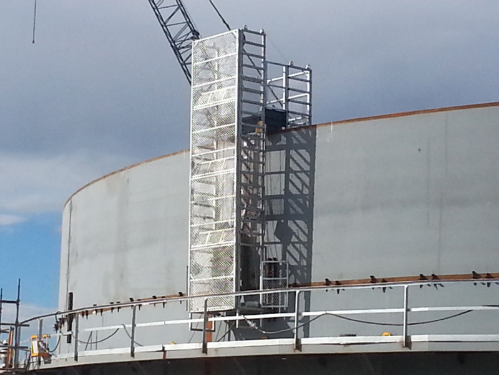
In the world of industrial construction, efficiency and precision are paramount, especially in projects involving large-scale tanks. One of the essential aspects of tank construction is ensuring that all components are installed accurately and in the shortest time possible. Manual tank construction often involves complex tasks, but modern innovations, such as the use of shell buggies, have dramatically enhanced efficiency. These machines have become indispensable in improving the speed, safety, and overall quality of tank building operations.
The Challenges of Manual Tank Construction
Building large tanks manually can be a labor-intensive process. Traditional methods require workers to transport materials, install shell plates, and carry out repetitive tasks, often leading to delays and safety concerns. The size and weight of tank components can also present challenges when trying to maintain consistency across the structure.
The intricate process of manual tank construction involves multiple stages, such as foundation laying, the erection of steel plates, welding, and finishing. Each stage requires a high level of coordination to ensure that everything aligns properly and is built according to specific design parameters. Manual handling of materials and components can significantly slow down this process and put a strain on workers, reducing overall project efficiency.
The Role of Shell Buggies in Tank Construction
Shell buggies have revolutionized manual tank construction by automating some of the most labor-intensive tasks. A shell buggy is a specialized machine designed to assist with the lifting and placement of shell plates, which are critical in forming the tank’s structure. These buggies can carry large shell plates with ease, significantly reducing the manpower required to move them around the construction site.
By using a shell buggy, workers are able to focus on tasks that require more precision, such as welding and structural alignment, while the buggy takes care of the heavy lifting. The introduction of shell buggies in tank construction has not only improved the overall speed of the project but has also helped in minimizing the risks associated with manual lifting and handling of heavy materials.
Advantages of Shell Buggies in Enhancing Efficiency
- Increased Productivity: One of the most significant benefits of using a shell buggy is the substantial increase in productivity. Shell buggies can transport large plates of steel to the required location quickly and efficiently, cutting down the time it would take workers to manually carry the plates. This increased speed accelerates the overall construction timeline, allowing teams to complete projects on schedule.
- Improved Safety: Lifting and moving heavy shell plates manually is not only laborious but also hazardous. Workers may suffer from injuries related to improper lifting techniques or fatigue. Shell buggies eliminate the need for workers to handle heavy plates, significantly reducing the risk of workplace injuries. This leads to a safer working environment and contributes to better worker well-being.
- Enhanced Precision: Manual handling can sometimes result in imprecise placement of components, leading to errors that require costly rework. Shell buggies are designed to provide more precise handling, ensuring that plates are aligned perfectly, which reduces the risk of misalignment and structural errors. This level of accuracy is crucial in ensuring the integrity of the tank’s design.
- Cost Savings: With shell buggies in place, construction companies can reduce the number of workers required for manual labor, leading to labor cost savings. Additionally, the reduced risk of errors and accidents results in fewer delays and less material waste, further contributing to cost savings over the course of a project.
- Reduced Equipment Wear and Tear: Traditional methods often require the use of cranes or other heavy equipment to move large shell plates. While this equipment is essential, it can be costly to maintain and operate. Shell buggies, on the other hand, are more efficient for the specific task of moving shell plates, helping to extend the lifespan of other equipment on the construction site.
Conclusion
In manual tank construction, efficiency is a key determinant of success. The introduction of shell buggies has transformed the construction process by significantly improving productivity, safety, precision, and cost-effectiveness. These machines have become an indispensable tool for construction teams working on large-scale tank projects, enabling them to overcome many of the challenges associated with manual tank construction. As the construction industry continues to embrace technological innovations, shell buggies will undoubtedly play a crucial role in the future of tank building.

